With the safety of our participants, staff, and the communities in which we operate in mind, Reconnect Earth has been carefully monitoring developments around COVID-19 in Washington State. Based on the recommendations of state and local authorities and health experts, we have concluded that unfortunately it is not safe to run our summer backpacking trips in 2020. While COVID-19 means we cannot run in-person programming for the time being, we are currently engaged in discussions about what a virtual programming option for the summer might look like. Stay tuned for more information soon!
This past weekend was Reconnect Earth’s Student Activism Training Summit at Bay View State Park, two days of discussing important environmental and social justice issues, developing activism skills, and getting to know a truly beautiful part of the Salish Sea region. On Saturday morning eight of us carpooled from Bellingham to the State Park, which sits on the edge of Padilla Bay. Soon after arrival we gathered on the beach to orient ourselves to our place in the landscape. We discussed the unique ecology of Padilla Bay–which has estuary characteristics from when the mouth of the Skagit River flowed into before the course of the river was altered by human activity. And we educated ourselves about the history of nearby Indigenous peoples now living on the Swinomish Reservation, and who have inhabited this landscape since time immemorial.
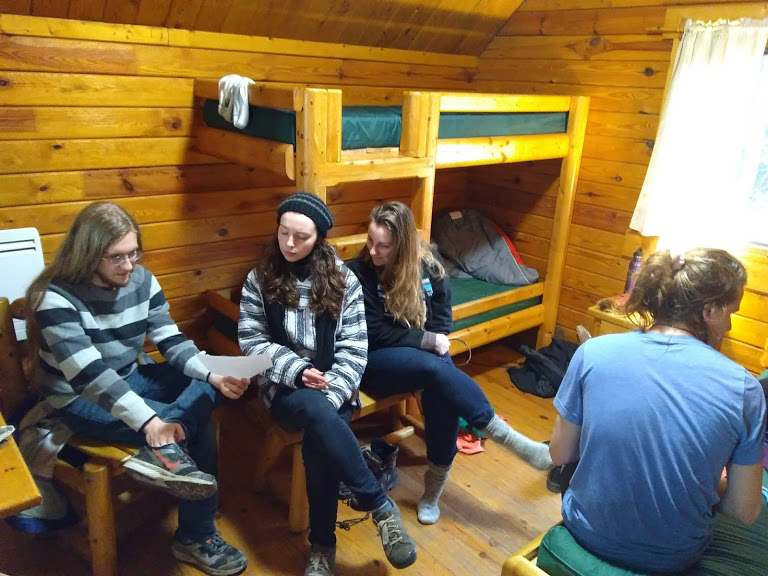
Later on Saturday, in one of the cabins where we’d be spending the night we delved into one of the most important activist components of the trip: learning best practices for public outreach, communications, and event planning as they relate to putting on strong activist events. Whether planning a rally or educational event, we explored how to communicate with the public in ways that maximize of having a successful, well-attended event. On Sunday we followed this up with a discussion on how to influence elected officials or other decision-making officials through events that demonstrate public support while playing to your campaign’s strengths. During the course of our time together we also worked to identify ways of combating White supremacy and other forms of oppression in outdoor spaces, and participated in an activity that reminded us of the roots of our motivation as activists.
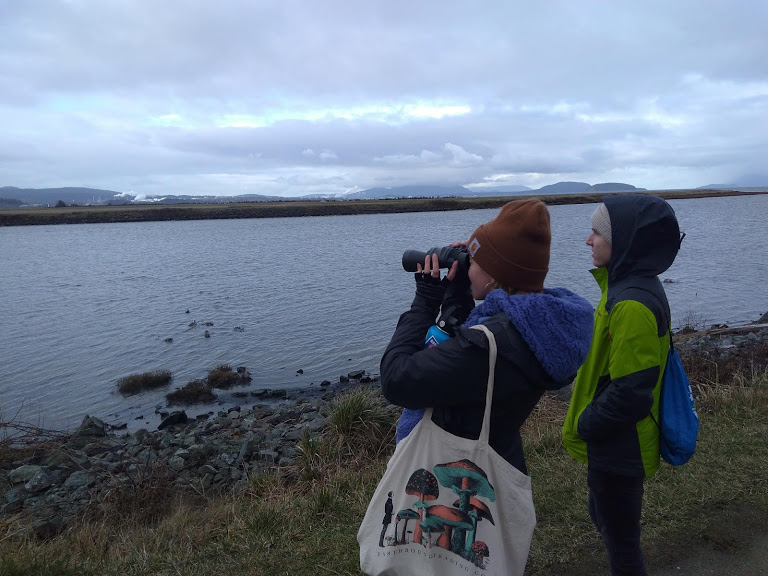
One of the highlights of the trip was on Sunday when we went for a hike along the edge of Padilla Bay itself. This part of Washington sits on a major bird migration route, where thousands of waterfowl who nest in Alaska or Canada wait out the winter before returning to those northern regions for breeding season. We spotted snow geese, swans, buffleheads, and two species of mergansers. Along with these waterfowl sightings came glimpses of raptors like northern harriers and majestic bald eagles.
Sunday in the late afternoon we headed back to Bellingham, ready to take action for a more just, sustainable Earth. Be on the lookout for other Reconnect Earth trips and activism opportunities coming up later this winter and spring!
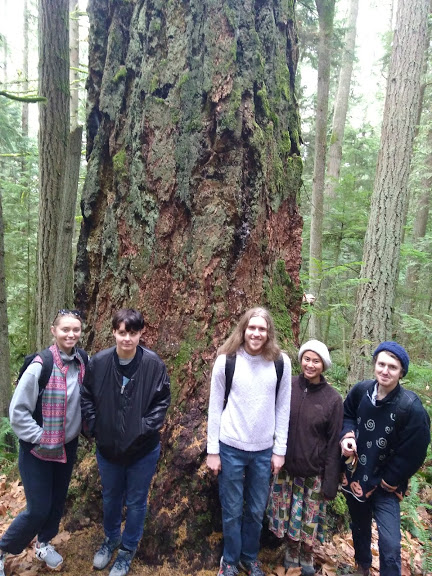
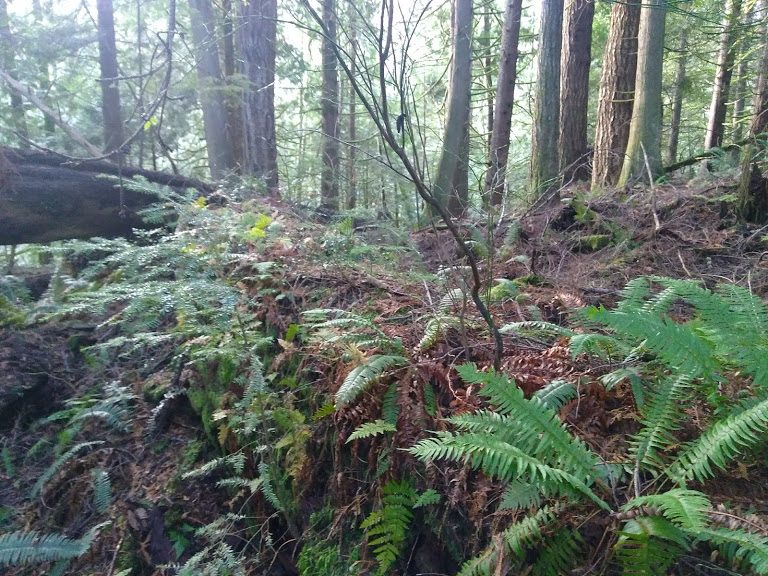
This past Sunday Reconnect Earth set out on our last weekend day trip of the Fall 2019 season, a hike through Stimpson Forest Nature Reserve on the edge of Bellingham. This tract of land, part of the homeland of the Lummi Nation since time immemorial, is unique in that while some logging has occurred there over the past century it has never been completely clear-cut and some trees hundreds of years old are still standing as they have for centuries. The reserve has characteristics of an old growth forest including not just big trees, but abundant fallen woody debris, snags, and a multi-layered understory. It is truly a beautiful place.
We met at the trailhead, several of us having taken the 512 bus from downtown Bellingham that conveniently stops right across the street. We then followed a route that took us in a loop through forest cover of varying ages, including groves where the enormous, old Douglas-firs stand.
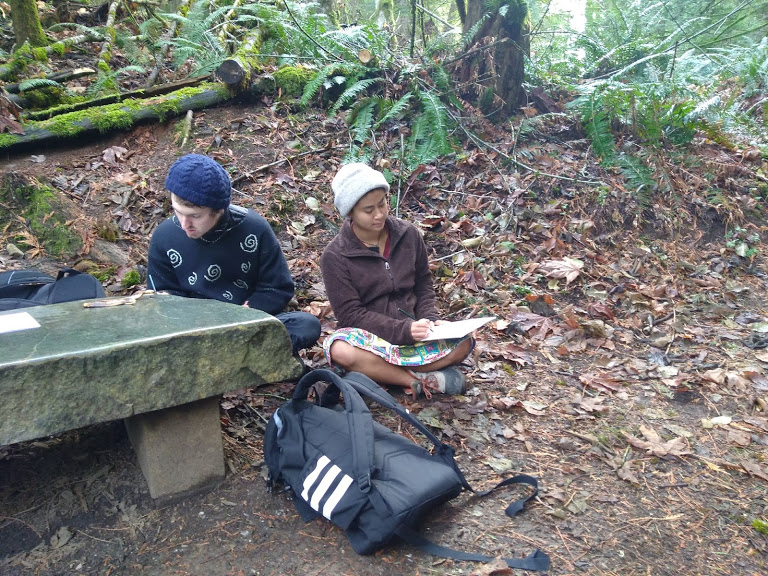
About halfway through the trip we stopped for a nature journaling and observation exercise designed to help sharpen our awareness of the landscape through which we were passing. This led to interesting discussions about what it means to be alert to the surroundings and how we perceive both the human and non-human elements of outdoor environments. As we practiced sketching and writing down observations, a deer made her own observations of our group while she nibbled on nearby shrubs.
Other highlights of the trip included spotting colorful mushrooms on the moist forest floor, hearing the sound of a Pacific chorus frog from a wetland close by, observing woodpeckers holes and other signs of animal activity, and discussing the important role of forests in sequestering carbon. We finished by talking about upcoming opportunities to take action on climate change locally, including Bellingham’s December 6th Climate Strike and chances to give input on local government energy policy.
Although this was Reconnect Earth’s last trip of the fall, we will be back with more weekend trips starting in late January. Keep an eye out for the Winter and Spring 2020 schedule which will be posted on this website soon!
On November 10th Reconnect Earth set out to witness one of the most spectacular seasonal phenomena in the Pacific Northwest: the return of migrating adult salmon to their spawning ground in the streams where they were born. The group of us met up at Bellingham’s Arroyo Park, then followed the trail down to Chuckanut Creek and investigated several spots along the creek looking for salmon.
Chum salmon in Chuckanut Creek
We were fortunate to get an up-close look at some of these amazing fish as they struggled upstream through the shallow waters. Though we didn’t want to disturb the salmon, there were times when we could have reached out and touched them. We also took time to identify and appreciate other animals and plants we encountered, including the three main conifer tree species that grow in the park: western red cedar, western hemlock, and Douglas-fir.
At this time of year Chuckanut Creek is home to migrating chum salmon, one of the five salmon species in the Northwest. We found numerous salmon resting in pools and fighting their way up through the rocky riffles as they sought their spawning grounds. This year’s returning adult salmon will lay eggs that hatch next year and give birth to a new generation of fish who will migrate to the ocean and spend years there fattening up before returning to their freshwater streams and beginning the cycle anew.
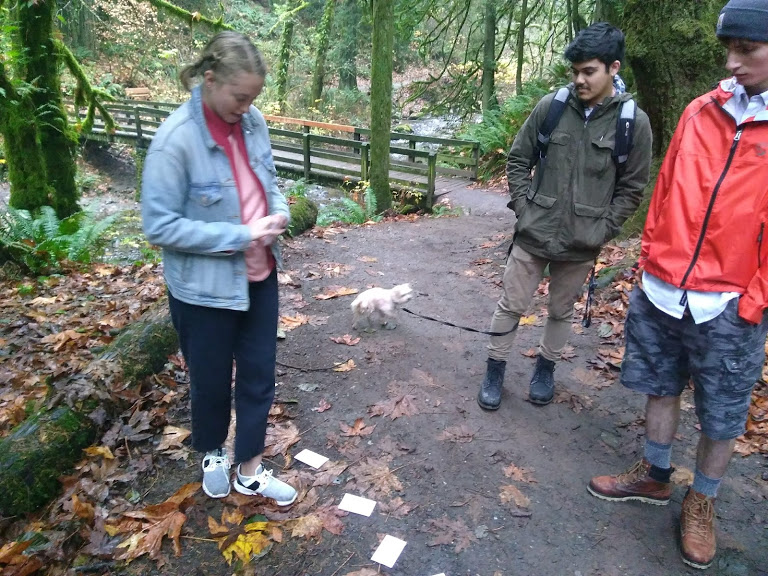
Creating a timeline of colonization
After taking plenty of time to appreciate the salmon, we gathered up for a discussion about the history of Indigenous peoples and colonialism in the Pacific Northwest. Like all parts of North America, the Northwest has a brutal history marked by genocide and the theft of land from Indigenous nations. These injustices have yet to be rectified and are still with us today. Our group participated in an activity meant to spark discussion by building a timeline of events from the past 200 years that affected Indigenous people in this region. Though this history includes many atrocities carried out by European colonists, it also includes inspiring stories of Indigenous resistance. From the rebellion led by Nisqually Chief Leschi in the 1850s, to recent victories won in court by tribes like the Lummi defending their salmon fishing rights, Indigenous people have been fighting back since the first wave of colonization began.
Two salmon making their way upstream
Our conversations about local Indigenous history led to an extremely thought-provoking discussion about the wider implications of colonization, and how traditional societies all over the world have cared for the landscapes they have inhabited since time immemorial. We finished by talking about a couple of upcoming opportunities to take action on environmental issues, including a December 3rd public hearing on a proposed crude fossil fuel export ban in Whatcom County, and the December 6th national day of climate strikes.
Overall this year’s salmon-searching trip was a big success when it came to both seeing fish and exploring the complex issues that define our relationship with the more-than-human world. Reconnect Earth has one more weekend trip coming up this fall. Learn more and sign up to join it here.



 Reconnect Earth