

On Saturday Reconnect Earth visited Lookout Mountain Preserve, a protected area in the northern Chuckanut Mountains. Though in Bellingham proper the snow from recent winter storms had almost disappeared, we arrived at the Lookout Mountain trail head to find a thick layer of snow still on the ground. We began hiking up the trail and soon were immersed in the forest.
Lookout Mountain showcases Pacific Northwest forests in a variety of stages of succession. Early on the hike we passed through groves of red alders, a sign of a recently disturbed area where the first generation of new tree life was returning. A little later the trail climbed through dense stands of young Douglas-firs of uniform age. Tree growth patterns and other evidence suggested a generation of conifers recovering from the effects of a landslide which likely occurred years ago.
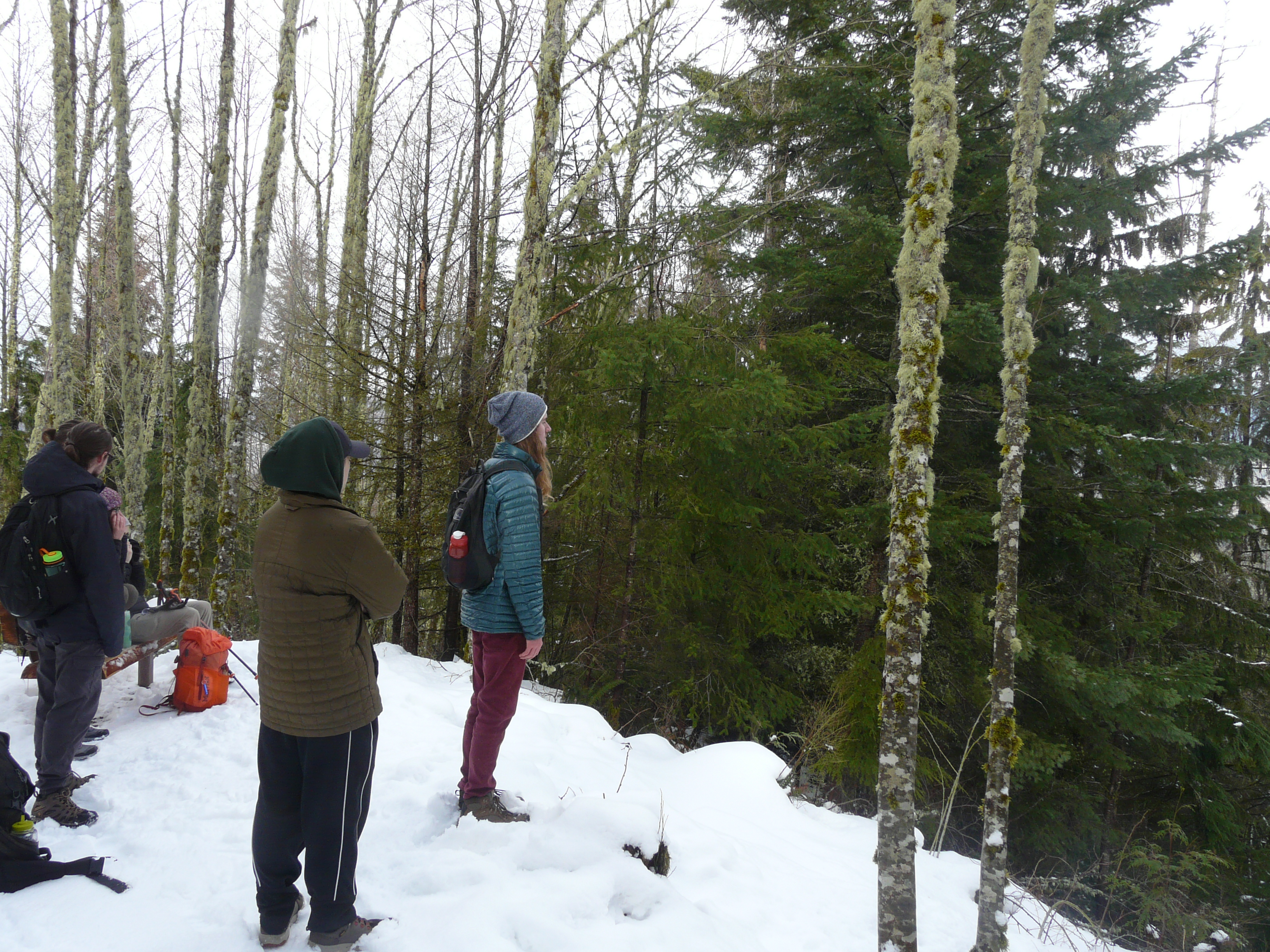
Later still we passed through stands of much taller, widely spaced Douglas-firs with young western hemlocks coming up underneath. Though still much too young to be considered old growth, this part of the forest is beginning to take on old characteristics like multiple layers of tree crowns and abundant fallen woody debris. Massive, decaying cedar stumps indicate that long ago, before the logging which took place over a hundred years ago, this area did indeed support old growth.
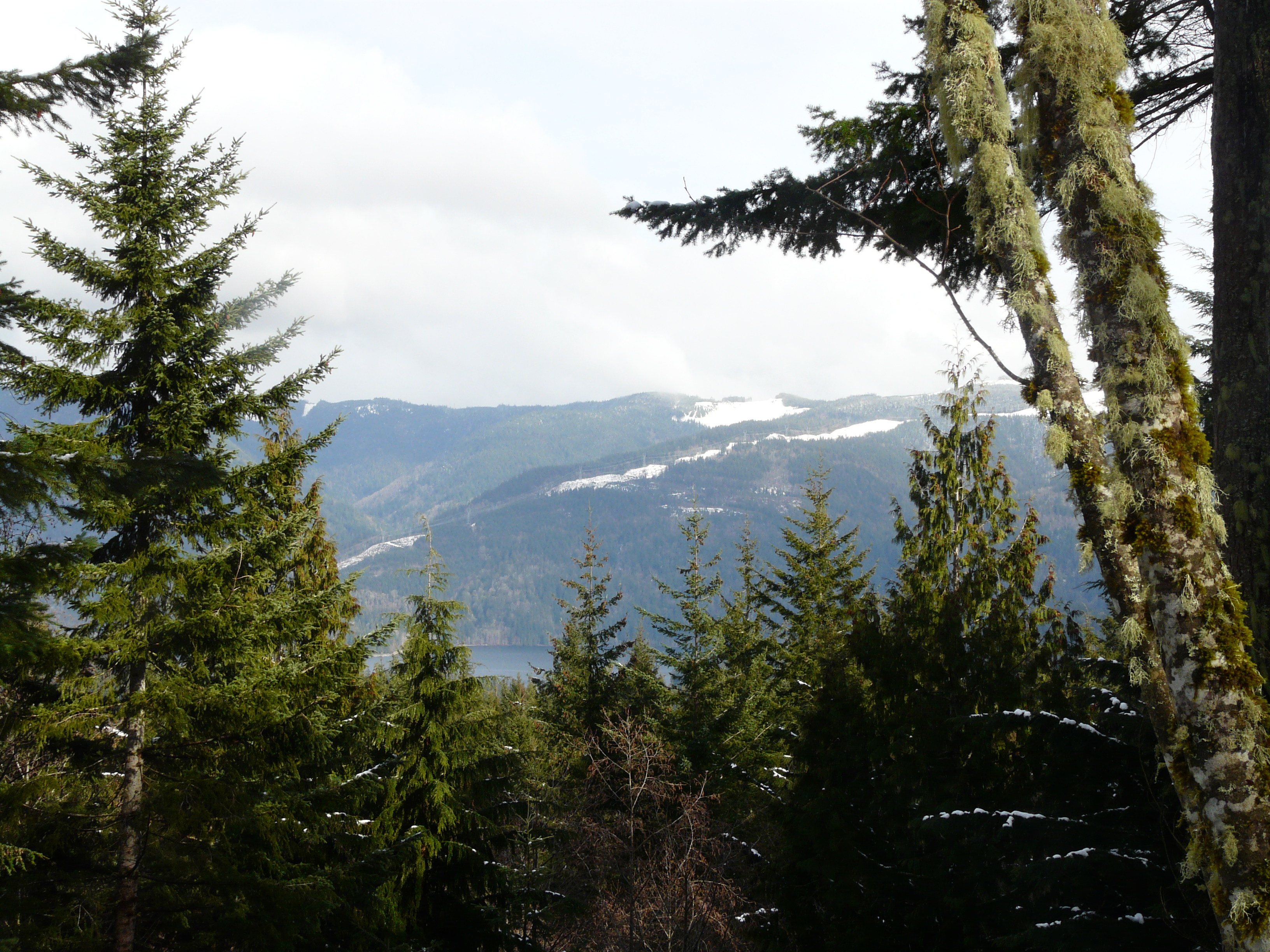
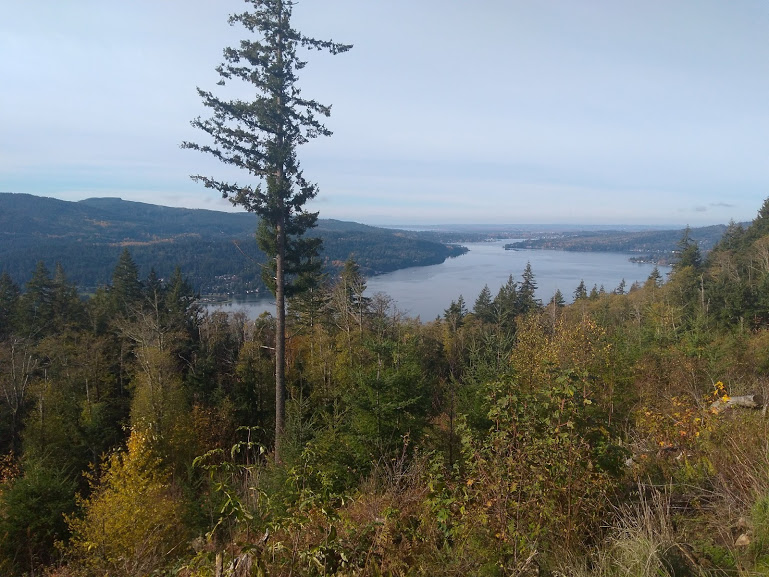
We paused on the trail for lunch and an interactivity activity that facilitated conversations about how we encounter nature and the “natural” world throughout the course of our lives. As we climbed higher the snow on the trail grew deeper, until we were hiking through a true winter landscape which looked utterly different from what we’d left behind in Bellingham. We emerged from the trees onto the Lookout Mountain Overlook with a view of Lake Whatcom and the hills beyond.
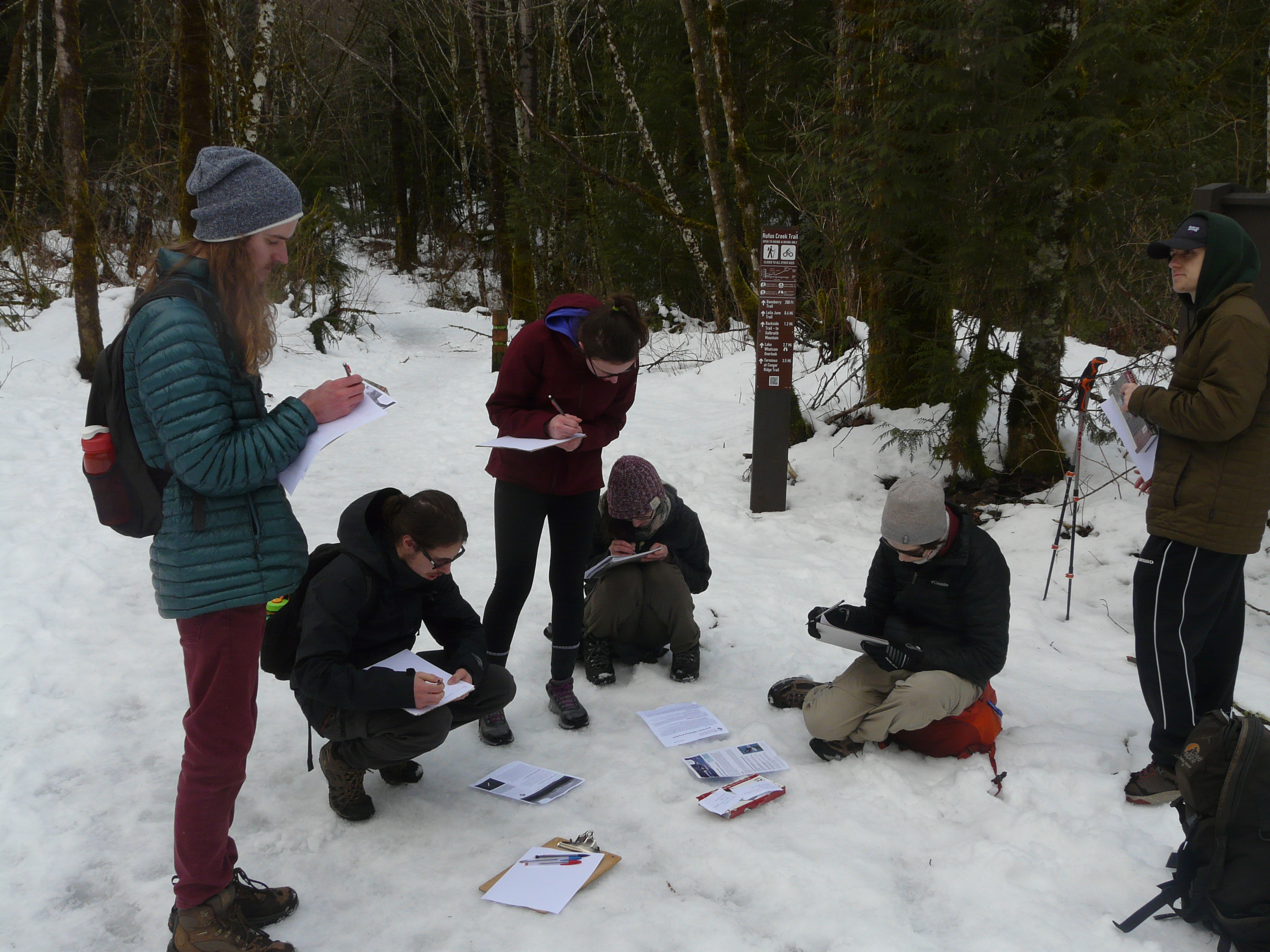
Toward the end of the hike we took another break to write letters to the incoming state senator from the Bellingham area, Liz Lovelett. Senator Lovelett was recently appointed to fill an empty seat in the state legislature, and we wanted to send her the message that people in Bellingham care deeply about a healthy, livable environment.
We arrived back at the trail head having experienced one of the many wild areas which exist mere miles away from Bellingham’s downtown. However, a bus stop at the trail head parking area makes Lookout Mountain Preserve unusual in that it is easily accessible via public transit. Maintaining this type of easy access to green space is an essential part of ensuring equity in natural park systems.
As we headed for home the late afternoon sank behind the hills. Up on the mountain the shadows of Douglas-fir trees grew longer on a snowy landscape far above Lake Whatcom.
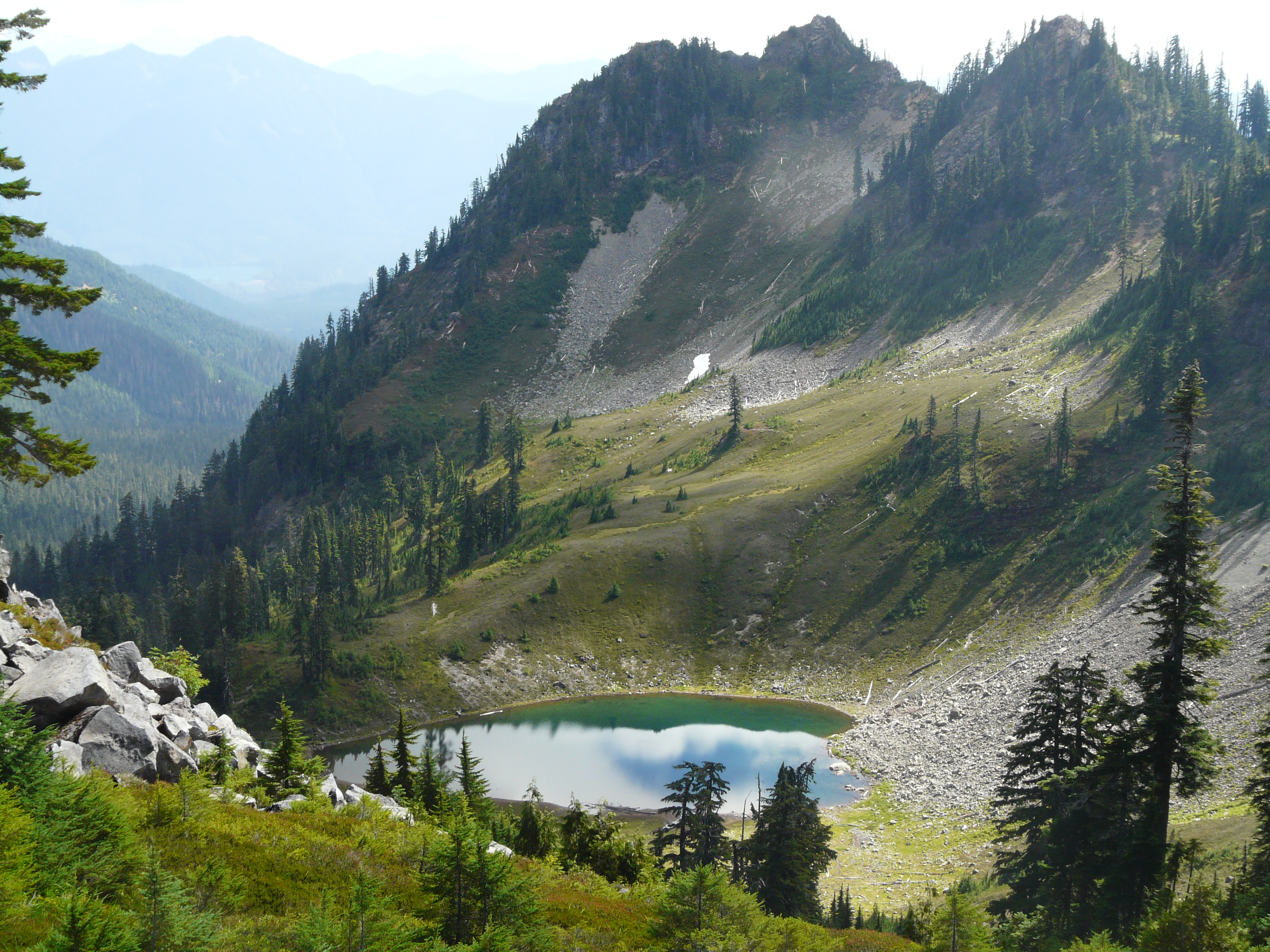 Applications are now live for Reconnect Earth’s Summer 2019 trips, an unforgettable eight-day experience backpacking and camping in Washington’s North Cascades, while learning about ecology, human and natural history, and grassroots social change. On a summer trip you’ll hike through ancient forests, climb to alpine lakes, or look down onto glaciers during one of our trips focused on harnessing your potential as an agent of positive social and environmental change.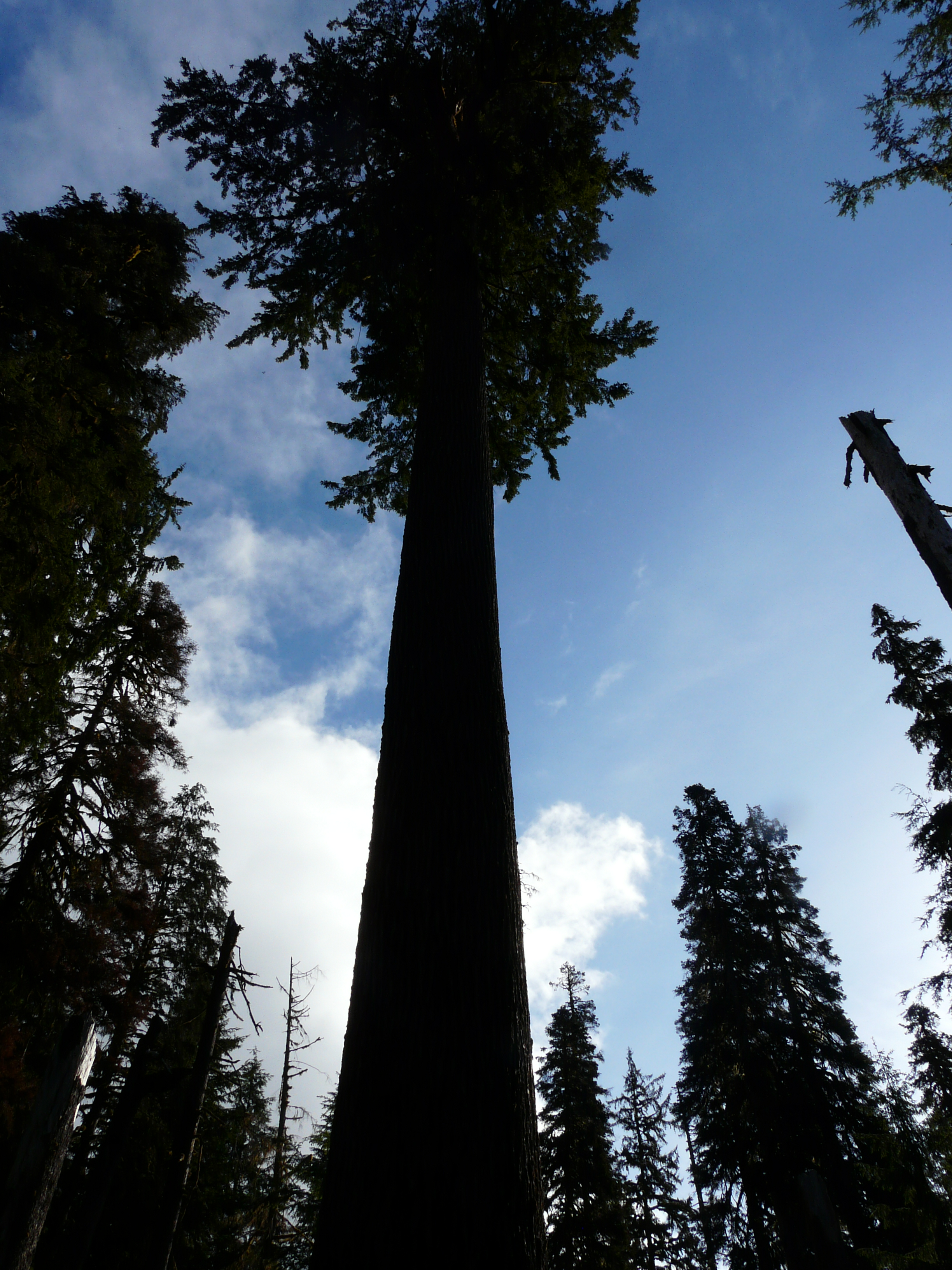
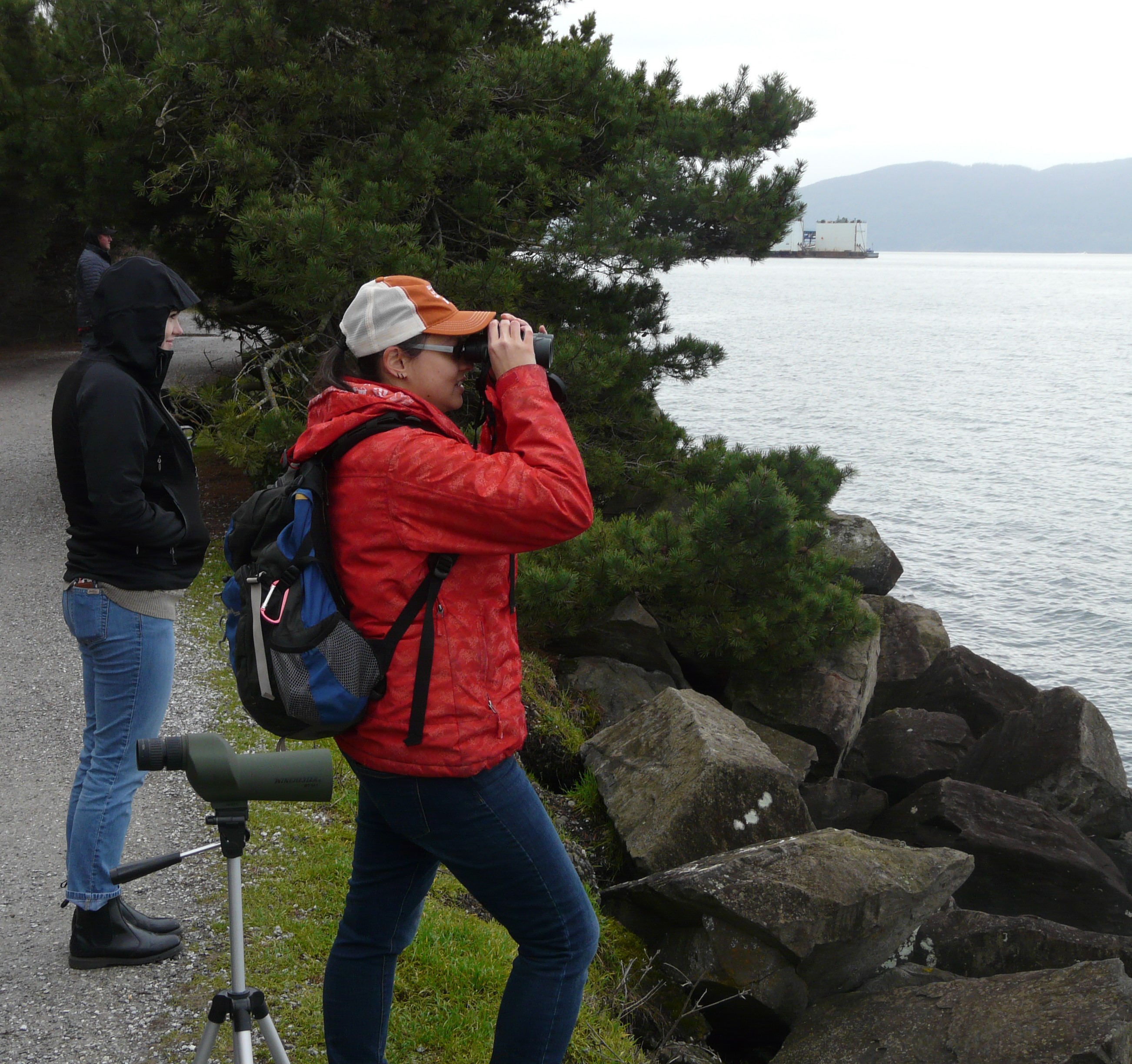 Reconnect Earth visited Bellingham’s Boulevard Park this Saturday for a walk following the edge of Bellingham Bay, during which we searched for marine invertebrates, birds, and other sea life. Seven of us explored the water’s edge and followed the over-water walkway to Fairhaven, stopping to observe any organisms we found along the way.
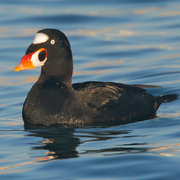
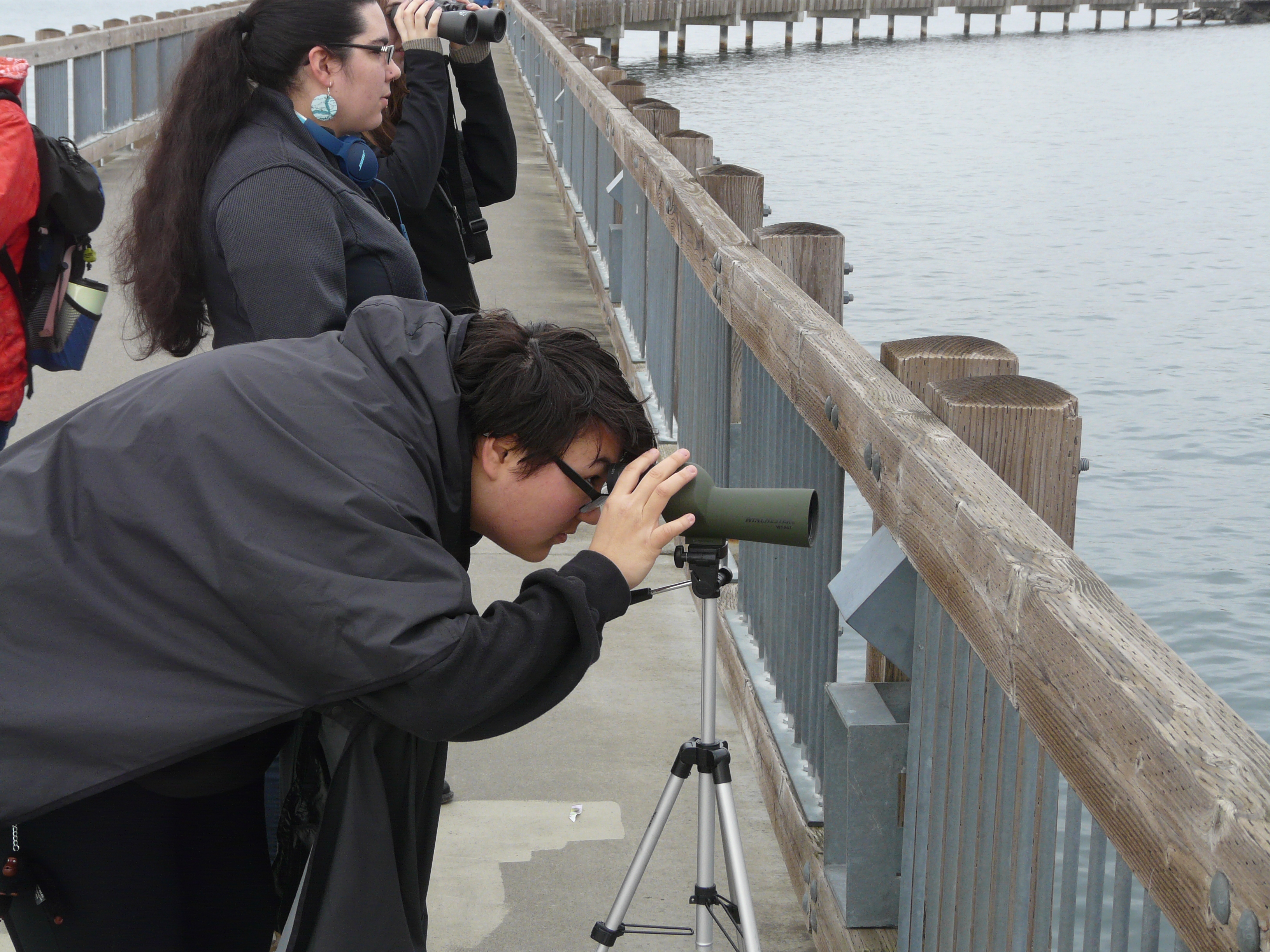 Farther out from shore a harbor seal poked its head above the waves, while a variety of birds hunted for food. With the help of a spotting scope we were able to identify surf scoters–a very distinctive-looking type of duck (pictured below) that uses its powerful beak to crack open marine mussel shells–far out on the bay. Slightly closer in a loon surfaced holding a small fish that it quickly swallowed. Common and Barrow’s goldeneye ducks came near enough to identify even with the naked eye. However, it took binoculars to make out the beautiful golden eyes that give these birds their name.
 At the end of our walk we took time to write letters to our Washington state legislators, urging them to support proposed bills that would help protect the Salish Sea and the creatures who call it home from toxic pollutants, catastrophic oil spills, and other threats. By advancing important pieces of legislation this year, Washington’s lawmakers have a crucial opportunity to protect the Salish Sea ecosystem that includes Bellingham Bay.
 Reconnect Earth is excited to announce our schedule of winter and spring trips for students is now available online!
  Reconnect Earth